For most of its life, ChatGPT had no ads. You asked a question, you got an answer, and nothing was selling to you in between. That changed in 2026. After announcing the move in January, OpenAI began testing ads inside ChatGPT in the United States on 9 February 2026 — and by May it had opened a self-serve Ads Manager to advertisers of any size and started expanding the pilot to more countries.
This is one of the most significant shifts in digital advertising since paid search. ChatGPT reached roughly 800 million weekly active users, and the vast majority of them are on the free tier — exactly the audience the new ad system reaches. For businesses, a brand-new, high-attention surface just opened up. This guide explains how ChatGPT ads actually work, what they cost, and what it means for companies in Kuwait and the wider GCC.
What Are ChatGPT Ads?
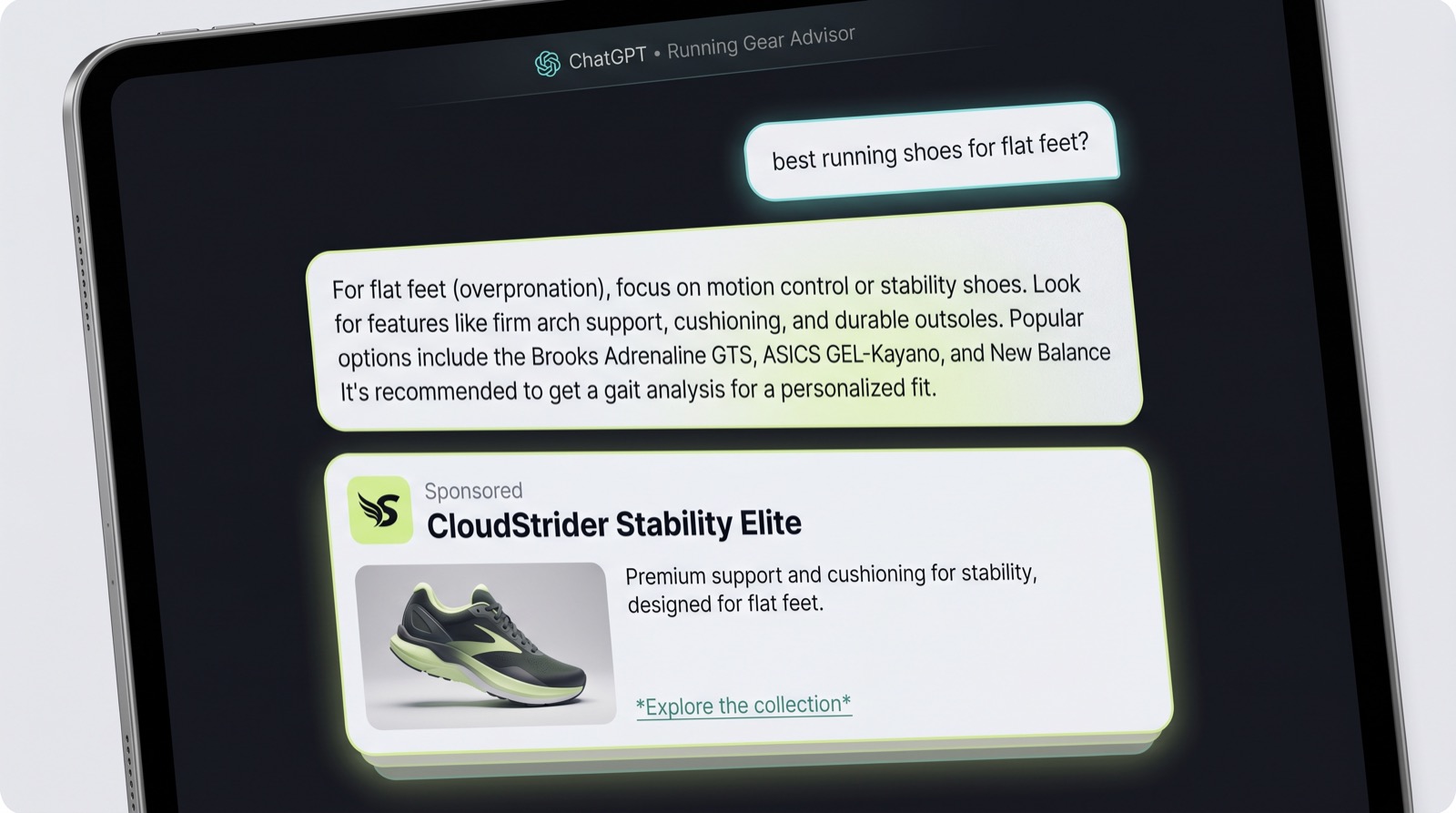
ChatGPT ads are sponsored cards that appear below the AI's response when your conversation matches what an advertiser is offering. They are not pop-ups, they are not injected into the answer, and they do not change what the model tells you. After ChatGPT finishes answering, a labeled "Sponsored" card may appear underneath with a title, a short description, an image, and a link.
OpenAI has been deliberate about the boundaries. According to the company, ads are always clearly labeled as sponsored and visually separated from the organic answer, ads do not influence the answers ChatGPT gives, and advertisers do not get access to your chats, chat history, memories, or personal details. Matching is based on the topic of the current conversation; if you opt in to personalized ads, OpenAI may also use signals like past chats and prior ad interactions to improve relevance.
The Ad Format: The "Chat Card"
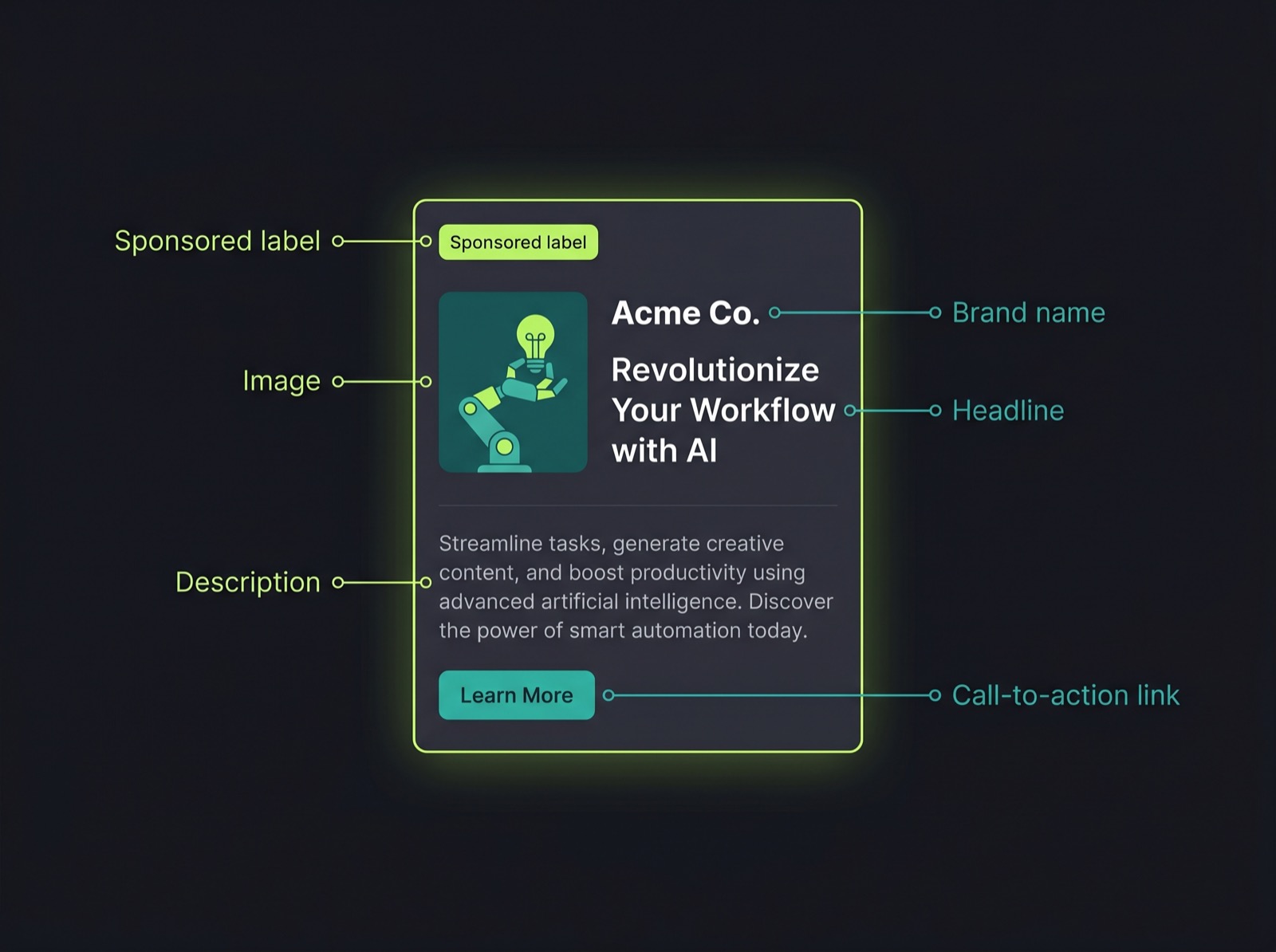
The core unit is the chat card — a single sponsored card rendered after the answer. It carries a brand name, a short headline, a one-line description, an image, and a destination link. For retailers, OpenAI has also been testing product carousels (scrollable shopping cards with images and prices, connected to product feeds) and early "chat with brand" experiences where a user can ask follow-up questions instead of clicking out.
What makes this different from a Google or Meta ad is the context. There are no keyword lists in the traditional sense. Instead, advertisers describe the intent and topics their offer is relevant to, and OpenAI matches cards to live conversations. When multiple advertisers are eligible, OpenAI shows the one it judges most relevant to the chat.
How Bidding and Pricing Work
ChatGPT ads run on an auction, similar to other major platforms. As the system has matured through 2026, OpenAI has added more bidding options and lowered the barrier to entry dramatically:
- CPM (cost per 1,000 impressions): The earliest model. Reported bids started around $60 CPM and have since cleared lower (roughly $25–$45) as ad supply scaled.
- CPC (cost per click): Added during the pilot. OpenAI's suggested starting bids have been in the $3–$5 per click range.
- CPA (cost per action): A conversion-based bidding option introduced later in the rollout for advertisers running pixel-tracked campaigns.
Crucially, the self-serve Ads Manager at ads.openai.com opened with no minimum spend, replacing the earlier six-figure managed-only commitments. That puts ChatGPT ads within reach of small and mid-sized businesses for the first time — you can run a genuine test on a modest budget.
Setting Up a Campaign
The workflow will feel familiar to anyone who has run Google or Meta ads, with one important twist around targeting:
- Create and verify an advertiser account at ads.openai.com (business details, tax info, payment method). Verification can take several business days.
- Define the campaign objective, budget, and market.
- Build an ad group with "context hints" — a handful of phrases describing the user intent your offer matches, rather than a keyword list.
- Install the conversion pixel (or use the conversions API) so you can measure outcomes, not just clicks.
- Submit creative for review — typically approved within about a day.
What This Means for Kuwait & GCC Businesses
At the time of writing, the ad pilot rolled out first in the US and then to markets including the UK, Mexico, Brazil, Japan, and South Korea — the GCC is not yet officially live. But that is exactly why now is the moment to prepare, not wait. Three reasons this matters for businesses here:
1. Early movers get cheap attention
Every ad platform is cheapest before everyone arrives. The same pattern that rewarded early Snapchat and TikTok advertisers in Kuwait will repeat on ChatGPT. Brands that learn the system now will have a head start when the platform opens regionally.
2. The organic answer matters as much as the ad
The sponsored card does not control which sources ChatGPT cites in its actual answer. Whether your brand gets mentioned in the response itself depends on your visibility across the web — which is why AEO and GEO (Answer Engine and Generative Engine Optimization) are becoming as important as SEO. Showing up in both the answer and the ad slot is the goal.
3. Bilingual, intent-rich queries are an opportunity
People increasingly ask ChatGPT the kind of high-intent questions they used to type into Google — "best clinic for…", "where to buy…", "which company does…". In a bilingual market like Kuwait, brands that prepare Arabic and English offers around those real questions are positioned to win the card when the auction reaches the region.
How Kinetix Can Help
We've added ChatGPT & AI search advertising to our paid media service. That means two things working together: running sponsored campaigns through OpenAI's Ads Manager as the platform becomes available in our markets, and optimizing your brand's presence so it surfaces inside ChatGPT's organic answers — not only the ad slot.
If you want to be ready before your competitors even notice the shift, message us on WhatsApp or DM @kinetixkw. We'll map where ChatGPT and AI search fit into your paid advertising strategy for your Kuwait business across Meta, Google, TikTok, and Snapchat — informed by how leading GCC brands allocate their ad budgets across platforms in 2026. And if you're wondering how AI tools are reshaping business operations beyond advertising, our guide to AI automation for Kuwait businesses covers the operational side of this shift.